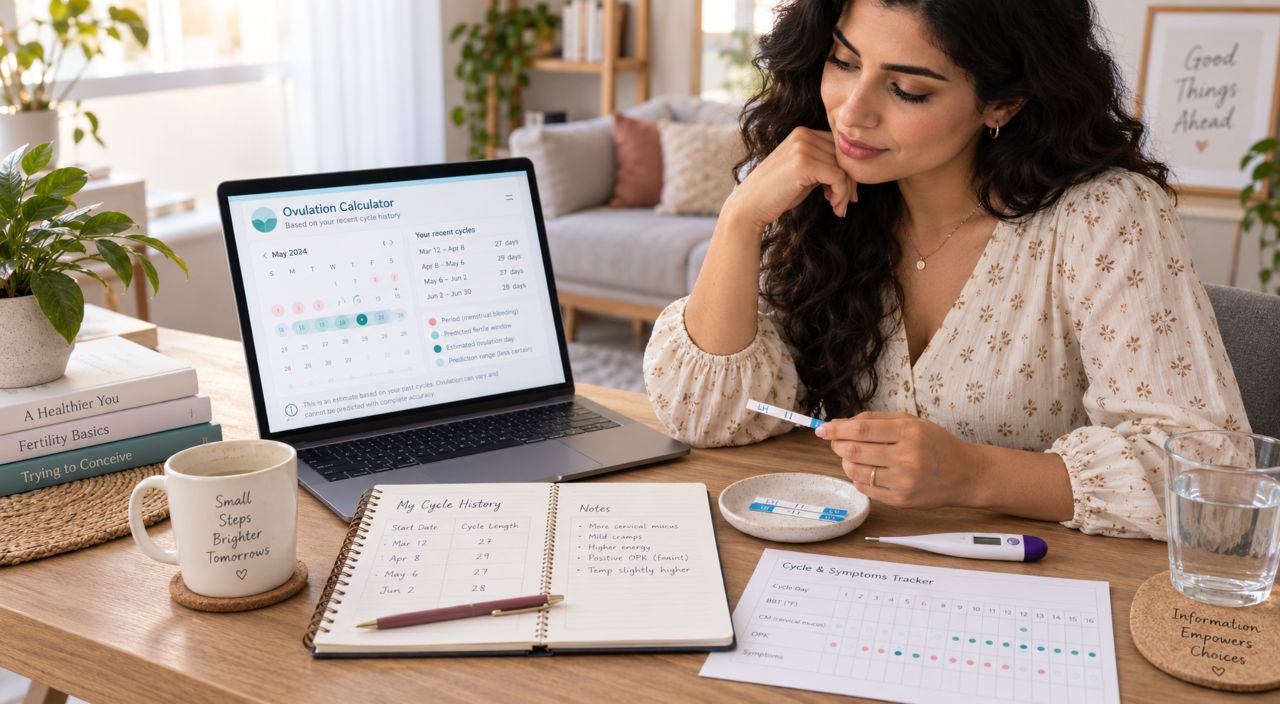

Ovulation calculators can be a helpful starting point when you’re trying to conceive—but how accurate are they, really? If your cycle isn’t always regular or you’re feeling unsure about timing, it’s important to understand both the strengths and the limitations of these tools.
Explore the full article here: How Accurate Are Ovulation Calculators? Insights and Limitations
Ask Dr. Stan
1. Dr. Stan, how accurate are ovulation calculators in predicting fertile days?
Ovulation calculators are helpful for estimating your fertile window, especially if your cycle is fairly regular. However, they’re not highly precise. Many only use your average cycle length to guess when ovulation might occur—which means they may only be accurate about 20% of the time. That’s why I often recommend combining them with other tools for more accurate results. Always check with your provider if your cycle is unpredictable or you’re struggling to conceive.
2. Why do ovulation calculators have such a wide margin of error?
Great question. The main issue is that these calculators use averages—they don’t account for natural variability in your body or hormones. Even women with regular cycles might ovulate earlier or later from month to month. So if your ovulation timing shifts, the calculator may miss it entirely. Personalized tracking methods, like checking hormone levels, tend to be much more accurate.
3. Is there a difference between calendar-based calculators and more advanced apps?
Absolutely. Calendar-based tools are the most basic—they just count days. But newer apps like Clue or Glow use algorithms, body temperature, and even symptoms you log to make better predictions. While they’re still not perfect, their accuracy improves over time, especially if you track several cycles consistently.
4. Can hormone tracking tools improve prediction accuracy?
Yes—by a lot. Ovulation is triggered by a surge in luteinizing hormone (LH), and tools that test for this surge (like ovulation predictor kits) are up to 90% accurate. These tests tell you when ovulation is likely to occur in the next 24 to 36 hours, making them a powerful complement to digital trackers. Always follow the instructions carefully, and talk to your provider about how to interpret results.
5. What if I have irregular cycles—are calculators still useful?
They can give a general idea, but they’re much less reliable for irregular cycles. If your cycle length varies a lot or you have conditions like PCOS, you may benefit more from hormone tracking, basal body temperature, or cervical mucus observation. These methods focus on what your body is doing in real time, not just past averages.
6. How do lifestyle factors and stress impact ovulation prediction?
Stress, weight changes, illness, sleep disruption—all of these can affect your hormones and shift your ovulation date. If your cycle is off because of lifestyle factors, the calculator may still predict a fertile window that no longer matches your body’s rhythm. I always remind patients: if you’re noticing irregularities or feeling stressed, bring it up during your next OB/GYN visit.
7. What’s the benefit of tracking basal body temperature (BBT)?
BBT rises slightly (about 0.5°F) after ovulation. By charting it daily, you can confirm that ovulation has occurred. While it won’t help predict ovulation in advance, it’s a great way to learn your cycle’s patterns over time. Combined with other methods, BBT tracking can give you a clearer fertility picture.
8. Is it better to use ovulation calculators or ovulation tests?
They serve different purposes. Calculators offer a broad estimate based on your cycle history, while ovulation tests detect hormone surges in real time. For women with regular cycles, a calculator may be enough. But if you’re looking for pinpoint accuracy, ovulation tests are the better option—especially when used alongside apps or tracking devices.
9. Can wearable devices really help track ovulation?
Yes, many women find them helpful. Devices like Ava bracelets track skin temperature, heart rate, and sleep, which all change around ovulation. When synced with a fertility app, they can give daily insights that go far beyond basic calculators. Just remember: these tools are most effective when used consistently and in consultation with your women’s health provider.
10. When should I see a doctor about ovulation concerns?
If you’ve been trying to get pregnant for over a year (or six months if you’re over 35), or if you suspect you’re not ovulating regularly, it’s time to consult your women’s health provider. You may need bloodwork, hormone panels, or imaging to understand what’s going on. Don’t hesitate—early evaluation can save time and bring peace of mind.