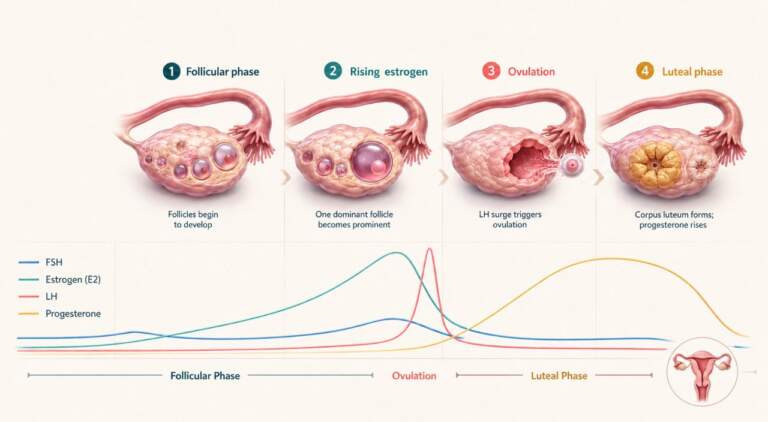

Understanding Your Cycle with Confidence
Whether you’re just beginning your journey to parenthood or trying to make sense of irregular cycles, today’s ovulation calculators and fertility trackers can offer clarity and support. These tools use powerful technology to predict your fertile days, helping you make informed decisions with less guesswork and more confidence.
Read the full article here: Top Ovulation Calculator Reviews for 2025: What’s Best for You?
Ask Dr. Stan
1. What exactly does an ovulation calculator do?
An ovulation calculator estimates your most fertile days based on your menstrual cycle data. Most tools use your period start date and cycle length to predict when ovulation is likely to occur. Some calculators also factor in basal body temperature, cervical mucus, and hormone levels for a more personalized approach. While helpful, these tools are best used alongside your body’s natural signs—and always in conversation with your doctor if you have cycle irregularities.
2. How accurate are these calculators in predicting ovulation?
The accuracy depends on the type of tool you’re using. Basic calendar-based calculators give general predictions, which can be off if your cycle varies. However, tools like the Mira Monitor or the ClearBlue Connected system that detect hormone levels—such as luteinizing hormone (LH)—offer much greater accuracy. They’re especially helpful for women with irregular periods. For the best results, consider combining methods and consulting your physician if you’re unsure.
3. Are there benefits to using a fertility tracking app with an ovulation calculator?
Absolutely. Fertility apps enhance ovulation calculators by learning your unique patterns over time. They help log symptoms, track trends, send reminders, and integrate with wearables or test strips. Apps like Premom, Period Tracker, or Proov provide real-time insights and simplify your fertility journey. Just be sure to choose an app that values your data privacy.
4. What features should I prioritize when choosing an ovulation calculator?
Key features to look for include hormone tracking (like LH or progesterone), app integration, cycle customization (especially for irregular cycles), and ease of use. Tools like the Ava Fertility Tracker even monitor your heart rate and skin temperature for a deeper view. Choosing a calculator that matches your lifestyle and health needs makes the biggest difference.
5. Can ovulation calculators help if I have PCOS or irregular cycles?
Yes, but you’ll need a more advanced option. Hormone monitors like Mira or test kits like Proov Confirm are great for women with PCOS because they detect ovulation based on hormone changes—not just calendar estimates. If you have an irregular cycle, look for tools that track multiple fertility signals and offer personalized feedback. Always talk to your doctor for added guidance on managing PCOS and fertility.
6. Are LH test strips enough on their own to predict ovulation?
LH test strips are simple and effective for many women. They detect the surge in LH that happens 24–36 hours before ovulation. Brands like Wondfo and Easy@Home are highly rated and affordable. But remember, if you’re not seeing a surge or have irregular results, combining strips with an app or hormone monitor can provide more clarity. Consult your doctor if you’re not getting consistent readings.
7. Is there a difference between digital ovulation monitors and wearable trackers?
Yes—digital monitors, like ClearBlue, involve test strips and a device that reads your hormone levels. Wearables, like Ava, track your body’s signals (such as temperature and heart rate) while you sleep. Both are effective, but wearables offer a non-invasive, hands-free experience and work well for women who prefer passive data collection.
8. How does data privacy factor into choosing a fertility tracker?
This is increasingly important. Make sure your app or calculator uses encrypted storage and complies with privacy laws like HIPAA. Your fertility data is sensitive, and you should feel confident that it won’t be shared without your consent. Many top apps now offer anonymous tracking options for added peace of mind.
9. Can using an ovulation calculator really improve my chances of getting pregnant?
Yes—timing is everything when trying to conceive. Using a calculator to identify your fertile window helps you focus efforts during your most optimal days. Studies show that couples who time intercourse around ovulation are significantly more likely to conceive. These tools give you insight and structure, helping reduce stress and increase confidence.
10. Should I talk to my doctor before using an ovulation calculator?
If you’re just starting out with regular cycles, a basic app or calculator is a great first step. But if you’ve been trying for several months without success, or if your cycles are irregular, it’s a good idea to involve your doctor. They can help you choose the right tool, interpret results, and rule out any underlying issues. Always remember—no app or device replaces professional medical advice.