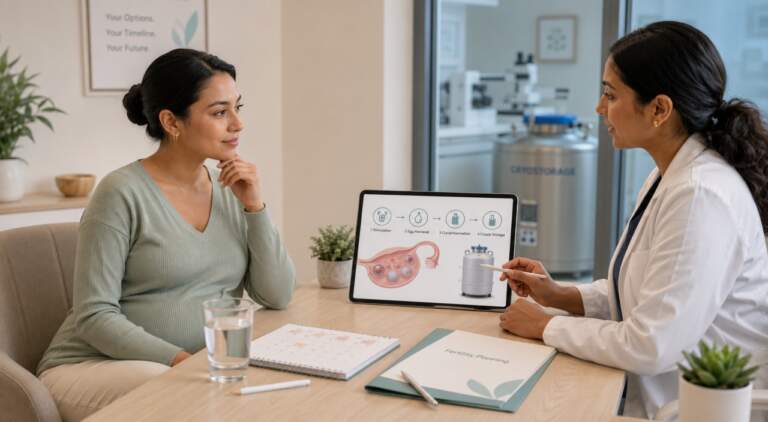

If you’re exploring options for getting pregnant and wondering how medications like Clomid, Letrozole, or gonadotropins work, you’re in good company. Many women begin their fertility journey with questions about ovulation-stimulating drugs, their effectiveness, and what to expect. In this Q&A, Dr. Stan shares clear, medically-sound insights to help you feel informed and empowered as you consider your next steps.
👉 For a deeper dive into how fertility medications work and what to expect, read the full article here
Ask Dr. Stan
1. What are fertility medications and how do they help with pregnancy?
Fertility medications are hormone-based treatments that stimulate ovulation—especially helpful for women who aren’t ovulating regularly. They help your body release eggs, giving you a better chance of conceiving, either naturally or with assisted reproductive technologies like IUI or IVF.
2. Is Clomid a good first step for women with fertility issues?
Yes, Clomid (clomiphene citrate) is often the first medication prescribed to women under 39 who aren’t ovulating. It helps the body produce the hormones needed for ovulation. About 60% to 80% of women who use it will ovulate, and many will conceive within a few cycles.
3. How does Letrozole compare to Clomid for ovulation?
Letrozole, also known as Femara, is especially effective for women with PCOS and those who haven’t responded well to Clomid. It works by lowering estrogen levels, which encourages your body to release more FSH and trigger ovulation. Some women find Letrozole has fewer side effects than Clomid.
4. What are gonadotropins and when are they used?
Gonadotropins are injectable medications that contain FSH, LH, or both. They’re often used when oral medications like Clomid or Letrozole haven’t worked. Because they’re potent, they require close monitoring to avoid complications like multiple pregnancies or ovarian hyperstimulation.
5. Are there risks with injectable fertility drugs?
Yes, injectable drugs can increase the risk of ovarian hyperstimulation syndrome (OHSS), which can cause bloating and discomfort. There’s also a higher risk of twins or triplets. That’s why it’s so important to use these medications under the supervision of a fertility specialist.
6. How do reproductive hormones like FSH and LH affect fertility?
FSH helps your ovaries grow follicles, while LH triggers ovulation. These hormones are essential to the reproductive process, and fertility medications are designed to support or replicate their natural rhythms to improve your chances of conceiving.
7. Can medications help if I don’t ovulate at all?
Absolutely. Ovulation induction medications like Clomid, Letrozole, and injectable gonadotropins are designed for exactly this purpose. They help regulate your cycle and encourage egg release. Always talk to your doctor to tailor the best treatment for your specific condition.
8. Is it common to take medications during IVF?
Yes, fertility medications play a central role in IVF. They help your ovaries produce multiple mature eggs for retrieval. Medications are also used to prepare your body for embryo transfer. These treatments are carefully timed and monitored by your reproductive specialist.
9. What side effects should I expect from fertility medications?
Side effects can include bloating, hot flashes, mood swings, and mild headaches. More serious but rare effects include vision changes and OHSS. Always inform your healthcare provider about any symptoms you experience during treatment.
10. Should I be concerned about long-term health risks?
Most women use fertility medications safely under medical supervision. Long-term risks, such as ovarian tumors, are rare. The benefits of treatment often outweigh the risks, but it’s crucial to have open conversations with your fertility provider before and during your treatment plan.