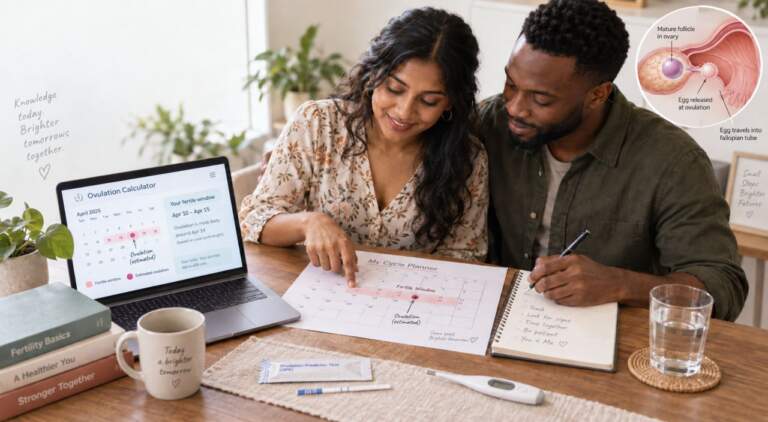

When you’re trying to conceive, knowing exactly when you’re most fertile can feel like unlocking a powerful piece of your fertility journey. Understanding how long after ovulation you can still get pregnant—and how to track those days—can help turn uncertainty into confidence. Let’s explore the science behind your most fertile moments.
Want the full breakdown on ovulation timing and pregnancy planning?
👉Ovulation Timing: How Long After You Can Still Get Pregnant
Ask Dr. Stan
1. Dr. Stan, how long does the egg live after ovulation?
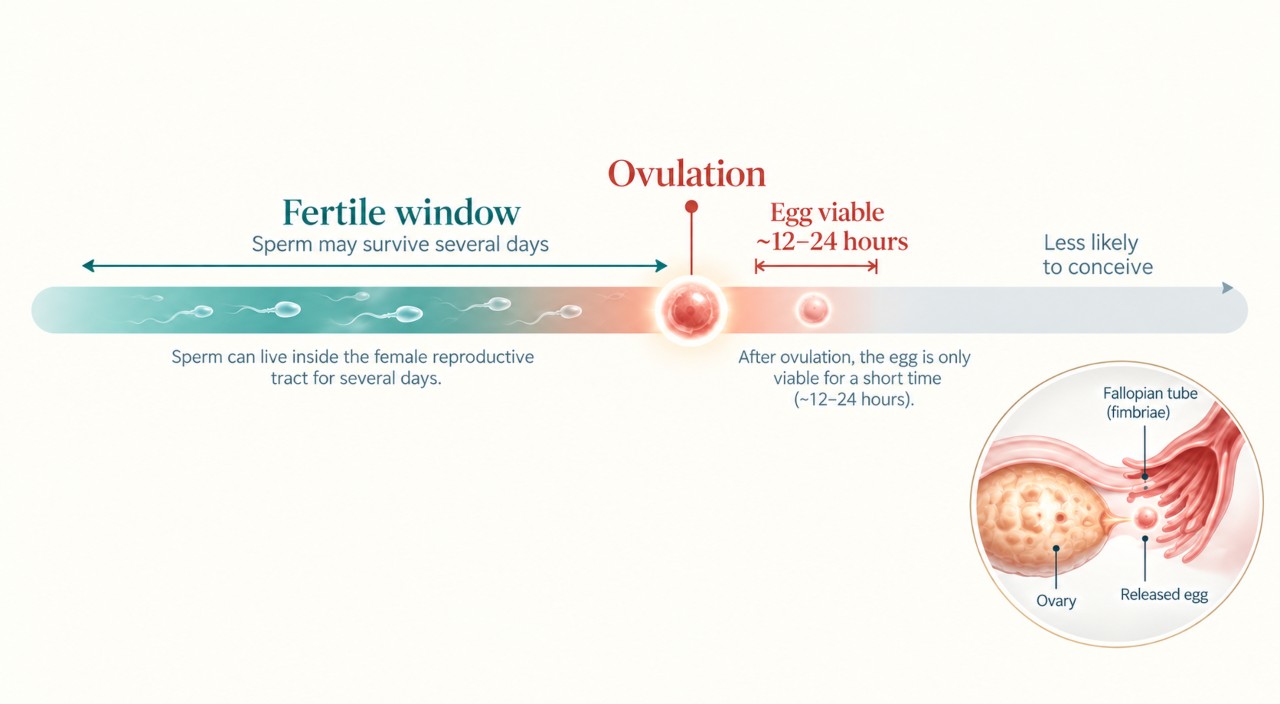
Once an egg is released during ovulation, it has a short window—just about 12 to 24 hours—to be fertilized. This is why timing is so important. While the egg’s life is brief, sperm can live up to five days in the reproductive tract, giving you a wider fertile window than you might think.
2. What’s the best time to have sex if we’re trying to conceive?
The three days leading up to ovulation, plus the day of ovulation, are your most fertile days. Because sperm can wait around for the egg to arrive, having intercourse during this window gives you the highest chance of conception. Try to focus on consistent intimacy during these key days.
3. How can I tell when I’m ovulating?
Many women track ovulation by observing changes in cervical mucus (it becomes clear and stretchy), slight rises in basal body temperature, or by using ovulation predictor kits (OPKs). If your cycles are regular, you can also estimate ovulation as about 14 days before your next period.
4. What’s a “fertile window,” and how long does it last?
Your fertile window lasts about six days: five days before ovulation, the day of ovulation, and sometimes the day after. This accounts for the lifespan of sperm and the brief time the egg is viable. Understanding and tracking this window is a game-changer for natural family planning.
5. Can I still get pregnant after ovulation has passed?
Once ovulation has occurred and the egg is no longer viable (typically after 24 hours), your chances of conceiving drop significantly. That’s why it’s helpful to track signs of approaching ovulation and aim to have intercourse before the egg is released.
6. Are ovulation predictor kits worth using?
Yes, for many people they’re a helpful tool. These kits detect the surge in luteinizing hormone (LH) that occurs 24 to 36 hours before ovulation. That gives you a clear heads-up that it’s time to try. Just remember, if your cycles are irregular, the kits may be harder to interpret.
7. Is tracking basal body temperature an effective way to find my fertile days?
Tracking your basal body temperature (BBT) can help confirm that ovulation has happened, but it doesn’t predict it. You’ll typically see a small rise in temperature the day after ovulation. When used alongside other methods, like cervical mucus observation or OPKs, it becomes more useful.
8. What about cervical mucus—how does that help me know I’m ovulating?
Cervical mucus becomes clearer, stretchier, and more slippery—kind of like raw egg whites—as you approach ovulation. This is your body’s way of making it easier for sperm to swim and survive. Paying attention to these changes can be a reliable way to time intercourse.
9. How accurate is the calendar method for tracking ovulation?
The calendar method can be helpful if your cycles are regular, but it’s not as precise as combining it with other tools. Ovulation doesn’t always occur on the same day every cycle. Adding methods like OPKs or cervical mucus tracking increases accuracy and confidence.
10. When should I talk to a doctor about ovulation and fertility?
If you’ve been trying to conceive for over a year (or six months if you’re over 35) without success, it’s a good idea to see a fertility specialist. They can evaluate whether you’re ovulating regularly and help identify any barriers to conception. Always consult your physician for personalized advice and care.