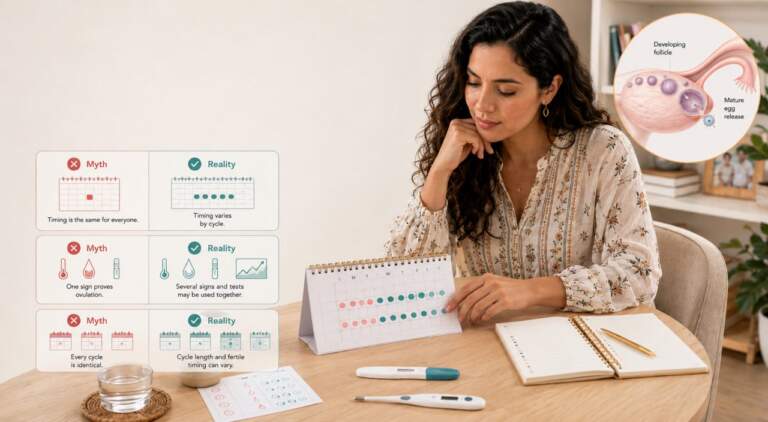

A Clearer Path to Conception, One Test at a Time
Trying to conceive can feel overwhelming, but understanding your body’s signs makes the journey easier. Ovulation calculators and predictor kits can help you pinpoint your most fertile days, offering valuable insight as you plan for pregnancy. Let’s walk through how these tools work and how to use them effectively.
👉 Want to master ovulation calculators step-by-step? Read the full article here
Ask Dr. Stan
1. What exactly does an ovulation calculator do?
An ovulation calculator helps estimate your fertile window—the days when you’re most likely to conceive. It does this by tracking hormonal changes in your body, especially the rise in luteinizing hormone (LH) that occurs before ovulation. By identifying this LH surge, these tools let you know when to time intercourse for the highest chances of pregnancy.
2. How accurate are ovulation test kits and calculators?
When used correctly, ovulation test strips are up to 97% effective at detecting the LH surge, which typically occurs 24 to 36 hours before ovulation. That said, accuracy depends on consistent testing and correct timing. As always, consult your doctor if you have irregular cycles or conditions like PCOS, which can affect results.
3. When should I start using an ovulation test each cycle?
For most women with regular cycles, ovulation happens around day 14. You’ll want to start testing a few days before your expected ovulation—typically around day 10 of your cycle. For those with irregular cycles, starting a bit earlier and testing over more days may be helpful. Morning testing is ideal since LH concentration is usually highest then.
4. What’s the difference between paper ovulation strips and digital ovulation tests?
Urine test strips are affordable and effective but require you to interpret faint lines—something that can feel confusing. Digital tests tend to be more user-friendly, offering clear symbols or digital readings. They cost more, but many find the clarity worth it. Choose the option that best fits your comfort level and budget.
5. Can I use an ovulation calculator if I have irregular cycles?
Yes, but you may need to combine it with other tracking methods for better accuracy—like observing cervical mucus or monitoring basal body temperature (BBT). If irregular cycles persist or you’re unsure when you’re ovulating, it’s a good idea to speak with your healthcare provider for personalized guidance.
6. How do I know if an ovulation test result is positive?
Most ovulation tests have two lines—a control line and a test line. If the test line is as dark or darker than the control, it usually means you’ve detected an LH surge. This is your cue to try for pregnancy within the next 24 to 36 hours. Always follow the specific instructions that come with your kit for best results.
7. Can cervical mucus help me know when I’m fertile?
Absolutely. During ovulation, cervical mucus becomes clear, stretchy, and egg white-like. This change helps sperm travel more easily. If you notice this shift in combination with a positive ovulation test, it’s a strong sign you’re in your fertile window.
8. Are fertility apps helpful alongside ovulation calculators?
Yes—they can be a great companion. Fertility apps track cycle length, symptoms, and test results to give you a broader picture of your fertility pattern over time. Many even send reminders or notifications, which helps keep testing and timing on track.
9. What are some common mistakes to avoid when using ovulation calculators?
The most common issues include testing too late in the day, misinterpreting results, or not accounting for hormonal conditions like PCOS. Also, avoid using diluted urine, as it can reduce test accuracy. For best results, test consistently at the same time each day and follow your kit’s directions closely.
10. When should I talk to a doctor about ovulation testing?
If you’ve been using ovulation calculators for several months without success—or if you’re not seeing a clear LH surge—it’s wise to speak with your healthcare provider. This is especially important if you’re over 35, have a history of PCOS, or have irregular periods. A personalized approach can make all the difference.