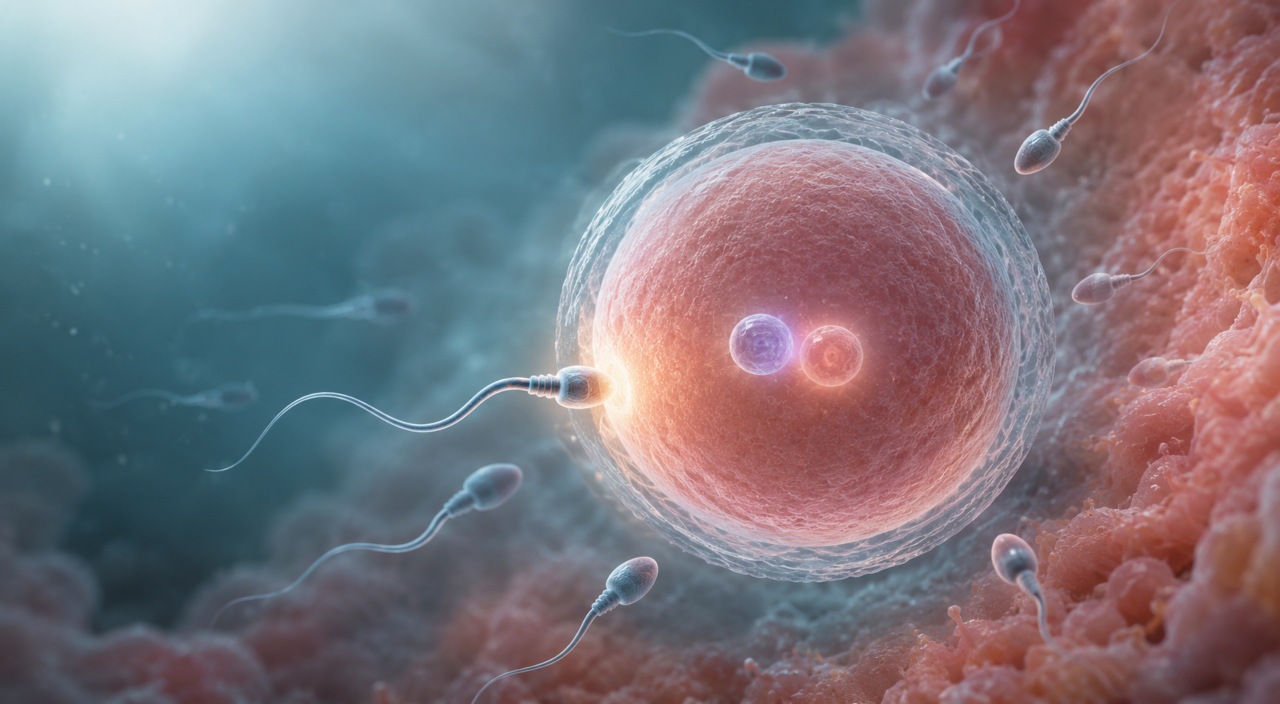

Did you know out of 300,000,000 human sperm, only about 200 make it to where fertilization happens? This fact shows how complex and precise fertilization is. It catches the eye of scientists who study how we reproduce. Digging into this science sheds light on the start of new life. It also helps improve technologies that aid in solving infertility.
Cervical mucus plays a critical role in sperm transport and fertility. During the menstrual cycle, cervical mucus changes, becoming thinner and more conducive to sperm movement around ovulation, which enhances the likelihood of fertilization.
Fertilization is when genetic material from sperm and egg combine to form a zygote. The success of this conception process depends on many factors, like how the sperm and egg interact. Fertilization research has led to breakthroughs like in vitro fertilization (IVF). IVF has changed the way we treat fertility issues and opened the door to new treatments.
Every step in fertilization shows how complex life’s beginnings are. From how calcium ions trigger egg reactions to changes in sperm, it’s all fascinating. Whether you’re curious about how embryos develop or the latest fertility technologies, this article gets into the fascinating details.
Key Takeaways
- Only about 200 out of 300,000,000 sperm reach the site of fertilization.
- Capacitation in the female reproductive tract takes approximately 5-6 hours in humans.
- Female mice with an inactivated ZP3 gene are infertile, showcasing the crucial role of the ZP3 protein.
- A rapid depolarization of the egg plasma membrane serves as a primary block to polyspermy.
- The egg cortical reaction prevents further sperm from entering the egg by altering the zona pellucida.
The Importance of Fertilization Science
Fertilization science is the study of how life starts. It examines how sperm and egg cells meet and blend. This blending of genetic information from both parents is crucial for passing on genes. It helps keep the human race alive by creating genetic diversity.
Fertilization usually happens in the fallopian tubes, a vital part of the female reproductive tract. Pregnancy begins about a day after the egg is released. It’s a critical moment. Did you know sperm can live at least 72 hours in the female body? But an egg can only be fertilized for about 24 hours after it’s released. The female reproductive tract plays a vital role in sperm capacitation, which is essential for sperm to successfully navigate through the tract and achieve fertilization of the egg. Fertilization leads to the fusion of male and female pronuclei, an event known as karyogamy, resulting in the formation of a zygote, soon to undergo cell division and multiplication within 24 hours.
Studying how the egg and sperm (gametes) interact helps solve reproductive health issues. There are important biochemical markers that help with assisted reproductive technologies (ART). This progress highlights how fertilization science aids in things like improving in-vitro fertilization rates.
Fertilization shows the power of genetic inheritance. When parents’ chromosomes mix, a unique cell forms, starting a new life. This process ensures traits and genetic diversity are passed down, shaping individuals and the species.
The Basics of Gamete Interactions
Gametes are specific reproductive cells from a man (sperm) and a woman (egg) that carry half the chromosomes of normal cells. Their interaction is complex. It involves the fusion of membranes. This allows genetic material to move from the sperm to the egg.
What Are Gametes?
Gametes are sperm cells in males and egg cells in females. They’re special because they have just one set of chromosomes. Most cells have two. The empty sperm cell nucleus is important—it has half the chromosomes needed to start a new life. The egg nucleus holds the other half. When they join during fertilization, they create the full set of chromosomes.
How Sperm Cell and Egg Meet
The journey of sperm to egg is full of challenges. Inside the female body, special pathways help sperm find the egg. Once close, the sperm must get through layers around the egg. This lets it reach the egg’s plasma membrane and fertilize it. When fertilization happens, it starts the growth of a new life.
Sperm Capacitation: Preparing for Fertilization
Sperm capacitation is an essential step that makes sperm ready to fertilize an egg. It involves complex changes within the sperm. These are caused by the female reproductive tract. These changes help sperm move better and get them ready for the next fertilization steps.
The Role of Capacitation
In 1951, research in Nature showed how crucial capacitation is. It prepares the sperm by changing their outer layer. This helps the sperm join and merge with the egg. This starts when sperm find the right conditions in the female reproductive tract.
Biochemical Changes in Sperm
The capacitation process is complex. It includes many biochemical changes. Sperm metabolism and movement increase when they meet bicarbonate ions. These ions are in the female tract. This leads to hyperactivation, controlled by different signaling molecules.
The timing of these changes matters a lot. It showed how capacitation involves many steps. These steps prepare sperm to go through fertilization successfully.
Ovulation Cycles and Their Role in Fertilization in the Fallopian Tubes
Understanding ovulation helps to understand how humans reproduce. The menstrual cycle readies the ovary to release an egg. This is vital for successful fertilization. The timing for this egg release is critical. It allows for the short period when fertilization can happen.
Understanding the Menstrual Cycle
At birth, each ovary has 1 to 2 million tiny follicles. Women go through a normal menstrual cycle that lasts 21 to 35 days throughout their life. Not everyone has the same cycle length. Only a few have a perfect 28-day cycle. Some experience irregular cycles. Menstrual bleeding can last from four to eight days.
The menstrual cycle has four main stages. The first is the menstrual stage which results in bleeding. Then, the follicular phase occurs which lasts about 13 or 14 days, including the menstrual bleeding days. This phase varies the most. Then comes the ovulatory phase, short but crucial, lasting from 12 to 24 hours and may lead to egg release. The last is the luteal phase, preparing the uterus for a possible embryo implantation which lasts about 14 days.
Timing of Ovulation
Ovulation usually happens on day 14 of a 28-day cycle, but this can vary between women. Hormones like LH and FSH trigger the egg growth and maturity. Estrogen levels increase, boosting LH production, which then causes ovulation. The leading follicle opens, releasing the egg into the fallopian tube for possible fertilization.
The timing for fertilization is narrow, with the egg ready for about 12 hours after its release. Sperm can make fertilized eggs survive inside the female body for up to three to five days. This creates a fertile window of roughly six days each cycle. This starts five days before ovulation and ends a day after. Knowing your ovulation cycle can greatly improve your chances of getting pregnant.
Mechanisms of Sperm-Egg Binding
The process of sperm-egg binding is vital for fertilization. It allows one sperm to penetrate the cell membrane of the egg. We’ll explore the mechanisms of this amazing biological event.
The Acrosome Reaction
A key step in sperm transport is the acrosome reaction. In this step, the sperm releases enzymes from the acrosome, at its head tip. These enzymes break down the egg’s zona pellucida, letting the sperm penetrate the egg.
This reaction starts when the sperm meets specific proteins in the zona pellucida. Then, calcium ion levels rise, triggering enzyme release. This precise event allows the sperm to get through the zona pellucida for fertilization.
Binding to the Zona Pellucida
The sperm’s binding to the zona pellucida is crucial. The zona pellucida has glycoproteins vital for this binding. JUNO and IZUMO1 proteins are key for sperm-egg connection. Research shows how specific proteins aid sperm-egg recognition.
In vitro fertilization owes a lot to understanding sperm-egg binding. This understanding highlights the importance of the acrosome reaction and zona pellucida proteins in reproduction.
Preventing Polyspermy: Ensuring Only One Sperm Fertilizes the Egg
It’s important that only one sperm fertilizes the egg. This avoids problems like abnormal growth and cell death. The fast block and the slow block are two main ways to stop extra sperm from entering.
The Egg Cortical Reaction
The egg cortical reaction blocks extra sperm from entering. When a sperm enters mature egg, about 15,000 granules beneath the egg’s surface activate. They release proteins that change the egg’s outer layer, stopping more sperm from binding.
The Role of Calcium Ions
Calcium ions in fertilization play a big part in the sperm surface egg cortical reaction. After fusion, Ca2+ enters and tells the granules to release their contents. This rapid increase in calcium triggers the slow block, stopping more sperm. Research found that calcium and sodium ions work together in this amazing regulation of fertilization.
In the end, preventing polyspermy allows better opportunity for the embryo to develop normally. Then, the fertilized egg (zygote) has the right combination of chromosomes for healthy growth.
Embryo Development Post-Fertilization
The journey of embryo development begins with a zygote’s formation. This is when the fertilization process ends. It includes early stages like cell growth and blastocyst creation.
First Cell Division
After fertilization, the zygote divides for the first time. This is called mitosis. This division is the first of many. It leads to the growth of complex tissues and organs in the baby.
Each cell division is vital for the embryo. Cellular differentiation is key here. The egg’s quality, sometimes linked to the woman’s age, affects embryonic growth.
Formation of the Blastocyst
About five days after fertilization, the embryo becomes a blastocyst. This stage is crucial. It forms a fluid-filled space, the inner cell mass (ICM), and outer cells known as the trophectoderm. These are important for implantation and further growth.
During this journey, the fertilized egg can implant in the uterus. Some fertilized eggs do not implant successfully, leading to significant pregnancy loss (miscarriage). This early development phase is critical for a healthy pregnancy and embryo growth.
Assisted Reproductive Technologies (ART) and In Vitro Fertilization
Assisted reproductive technologies, or ART, have changed the the approach to infertility. Since 1978, starting with the birth of Louise Brown through in vitro fertilization (IVF), these methods have provided hope. ART includes different ways to help those struggling with infertility. It makes what seemed impossible, possible. IVF is one popular option. It involves taking eggs from the ovary, fertilizing them in a lab, and then placing the embryo in the uterus. This can help with many fertility issues.
The IVF process has multiple steps. First, there is controlled ovarian stimulation for ultrasound-guided retrieval of oocytes. Next, there is sperm delivery into the egg. The successful fertilization allows the embryo to grow in culture (in vitro). Then, the transfer of the embryo to the mother. Each step is vital for success.
Ethical guidance and genetic counseling also play important roles in ART. They help with decisions about using donor eggs, sperm, or embryos and address genetic concerns.
The American Society of Reproductive Medicine (ASRM) sets guidelines for ART. They require well-staffed and equipped labs for safety and effectiveness. The Centers for Disease Control and Prevention’s 2021 report gives data on ART’s success. It helps providers and patients make better decisions. As ART evolves, it continues to offer hope to many wanting to start a family.
FAQ
What is Fertilization Science?
Fertilization Science studies how sperm and egg merge to create life. It studies how genetics from two people begin a new being’s miraculous life journey. This field unwraps the detailed steps of joining genetic materials and starting embryo growth.
Why is fertilization important?
It’s the only way for life to begin as it combines genes from the man and woman. This process helps families by adding to genetic variety.
What are gametes?
Gametes are cells made for reproduction. Sperm is the male gamete, and the egg is female gamete. They each have half the chromosomes needed to create a new baby.
How do sperm and egg meet?
For them to meet, sperm make a journey through the female reproductive tract to find the egg. Once the egg is in the fallopian tube, they meet for possible fertilization. When conception happens, it starts the miraculous life-creation process.
What is sperm capacitation and why is it important?
Sperm capacitation is a process where sperm get ready to meet the egg. Changes boost their metabolism and help them move faster. This prepares for the sperm-egg fusion, making them fertilization-ready.
What biochemical changes occur in sperm during capacitation?
Capacitation changes sperm, making their membrane more fluid. They move in a more active way and the proteins in them change too. All these are sparked by the things they meet in the female body plus elements such as bicarbonate ions.
What is the menstrual cycle’s role in fertilization?
The menstrual cycle gets the egg ready for ovulation. It’s all about timing. The egg’s journey through the fallopian tubes must match with timing of intercourse.
How does the acrosome reaction assist in sperm-egg binding?
The acrosome reaction lets sperm get through the egg’s outer layer with enzymes. Triggered by proteins and calcium ions, it’s a crucial step for sperm and egg to connect.
What mechanisms prevent polyspermy?
To stop multiple sperm from fertilizing the egg, certain mechanisms kick in. For example, the whole egg cell membrane changes to keep extra sperm out once the first sperm enters. This mechanism is due to calcium ion surge.
What happens during the first cell division post-fertilization?
After joining, the single cell divides multiple times, becoming a blastocyst. This beginning is vital and depends on factors like the fertilized egg itself’s health and the mother’s age.
What are assisted reproductive technologies (ART)?
ART refers to methods like IVF to help with baby-making outside the body. They offer hope to people who cannot have babies the usual way, opening new doors to becoming parents.
References
- Fertilization – Molecular Biology of the Cell – https://www.ncbi.nlm.nih.gov/books/NBK26843/
- Fertilization | Steps, Process, & Facts – https://www.britannica.com/science/fertilization-reproduction
- Conception: Fertilization, Process & When It Happens – https://my.clevelandclinic.org/health/articles/11585-conception
- Fertilization & Implantation- An Overview of Fertilization in Humans – https://byjus.com/biology/fertilization-and-implantation/
- Pollination and fertilisation – https://www.sciencelearn.org.nz/resources/77-pollination-and-fertilisation
- Fertilization Discovery Reveals New Role for the Egg – https://news.virginia.edu/content/fertilization-discovery-reveals-new-role-egg
- The Genetics and Cell Biology of Fertilization – https://www.ncbi.nlm.nih.gov/pmc/articles/PMC3275088/
- Gamete activation: basic knowledge and clinical applications – https://www.ncbi.nlm.nih.gov/pmc/articles/PMC4917743/
- Factors and pathways involved in capacitation: how are they regulated? – https://www.ncbi.nlm.nih.gov/pmc/articles/PMC5356907/
- A side-by-side comparison of different capacitation media in developing mouse sperm fertilizing ability – Scientific Reports – https://www.nature.com/articles/s41598-024-65134-w
- Physiology, Ovulation – StatPearls – NCBI Bookshelf – https://www.ncbi.nlm.nih.gov/books/NBK441996/
- Ovulation | Physiology, Hormones & Fertility – https://www.britannica.com/science/ovulation
- Menstrual Cycle – Menstrual Cycle – Merck Manual Consumer Version – https://www.merckmanuals.com/home/women-s-health-issues/biology-of-the-female-reproductive-system/menstrual-cycle
- Frontiers | Editorial: Fertilization in the spotlight: Dynamics and mechanisms of sperm-egg interaction – https://www.frontiersin.org/journals/cell-and-developmental-biology/articles/10.3389/fcell.2022.993865/full
- The molecular basis of fertilization (Review) – https://www.spandidos-publications.com/10.3892/ijmm.2016.2723
- Gamete Fusion and the Prevention of Polyspermy – Developmental Biology – https://www.ncbi.nlm.nih.gov/books/NBK10033/
- How the body prevents multiple sperm from fertilizing an egg – https://www.earth.com/news/how-body-prevents-multiple-sperm-from-fertilizing-an-egg/
- Two pathways regulate cortical granule translocation to prevent polyspermy in mouse oocytes – Nature Communications – https://www.nature.com/articles/ncomms13726
- Embryology, Fertilization – StatPearls – NCBI Bookshelf – https://www.ncbi.nlm.nih.gov/books/NBK542186/
- Embryology, Week 1 – StatPearls – https://www.ncbi.nlm.nih.gov/books/NBK554562/
- Assisted reproductive technology: Short‐ and long‐term outcomes – https://www.ncbi.nlm.nih.gov/pmc/articles/PMC9809323/
- Assisted Reproductive Technology (ART) Techniques – StatPearls – https://www.ncbi.nlm.nih.gov/books/NBK576409/
- Assisted Reproductive Technology | IVF | MedlinePlus – https://medlineplus.gov/assistedreproductivetechnology.html